If you’ve built furniture for any length of time, you’ve come across self-centering dowel jigs. They appear in tool roundups, beginner guides, and forum discussions. They promise fast setup, accurate alignment, and clean joints with minimal layout.
Many woodworkers see them as a logical step up from basic drilling or even from screws and pocket holes.
You may already understand dowel joinery, or you might own a simple jig and be wondering where its limits are. This guide explains how self-centering dowel jigs work, where they perform well, where they fall short, and how they compare to preset dowel jigs in real projects.
By the end, you should have a clearer sense of whether a self-centering jig fits the way you build, or whether a more flexible approach may serve you better over time.
What Is a Self-Centering Dowel Jig and Why Are They Popular?
How They Work
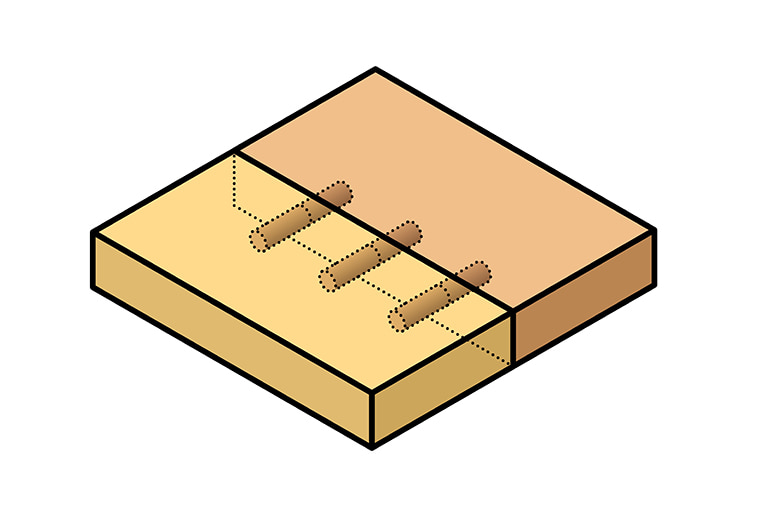
A self-centering dowel jig uses opposing jaws or guides that clamp onto the edge of a board. As the jig tightens, the drill guides move inward evenly, placing the hole in the center of the material.
In simple terms, the jig finds the center for you. There’s no measuring offsets or marking centerlines. You clamp, drill, and move to the next hole.
Why Beginners Like Them
They feel intuitive
You place the jig on the edge, tighten it, and drill. That straightforward process builds confidence, especially for people new to dowel joinery.
They remove measuring
Because the jig centers automatically, there’s no dividing board thickness or laying out centerlines. That simplicity helps reduce early mistakes.
Why They’re Recommended So Often
Self-centering jigs perform very well in controlled situations. Tutorials often show flat boards of equal thickness joined edge-to-edge, which is exactly the environment these jigs are designed for.
In those cases, they work exactly as advertised: quick setup, clean holes, and reliable alignment.
The challenge isn’t how they work; it’s usually just a case of real projects not always looking like those demonstrations.
The Hidden Limitations of Self-Centering Dowel Jigs
They’re Designed for Flat, Edge-to-Edge Joints
Self-centering jigs perform best when both pieces sit flat, parallel, and flush. The jig needs access to both sides of the material to center correctly.
This makes them well suited for:
• panel glue-ups
• tabletops
• flat frames assembled on a bench
But many real-world joints are different:
• cabinet parts meet at right angles
• face frames interrupt flat surfaces
• vertical parts limit access
• rails and stiles reduce clamping area
In these situations, positioning the jig becomes more difficult, and alignment depends more on careful handling than on the jig’s design.
The jig is still working correctly, but the project has simply moved beyond the conditions it was designed for.
They Assume Consistent Material Thickness
Self-centering jigs rely on symmetry. Both sides of the jig move inward equally, which assumes the material thickness is consistent.
In practice:
• plywood varies from sheet to sheet
• solid wood moves with humidity
• milling tolerances add up
Even small differences can shift the true center. Over multiple dowels, those shifts can affect alignment when parts come together.
With a self-centering jig, the jig determines hole placement. If material varies, that placement may not align with the reference face that matters most.
Centering Still Takes Time
Self-centering does not mean instant.
Each hole requires clamping, drilling, unclamping, and repositioning. On simple joints this feels quick, but on larger projects repetition slows the process.
As projects become more complex, you reset the jig frequently, flip parts, and work around clamps or assemblies. The initial speed advantage becomes less noticeable.
When a Self-Centering Dowel Jig Makes Sense
Self-centering jigs still have a place in many shops. They perform very well when the joint matches their strengths.
They are ideal for:
• flat pieces joined on a bench
• panel glue-ups
• simple frames
• consistent stock thickness
If most of your dowel joints happen before assembly and on flat material, a self-centering jig can save time and simplify setup.
The issue isn’t using one, it’s expecting it to handle every type of joint.
Why Many Woodworkers Outgrow Self-Centering Jigs
As skills grow, projects change. Panels become cabinets. Simple assemblies turn into casework, face frames, and shelving.
More advanced builds require:
• repeatability across different joint types
• consistent reference faces
• control over dowel placement
Self-centering jigs can struggle here. Woodworkers often find themselves shimming, marking reference faces anyway, or adjusting setups to compensate.
It’s also worth noting that many self-centering jigs have a minimum edge width they need to reference in order to center. This can make them difficult to use on narrow boards, like what you might use in a face frame assembly.
Most don’t stop using dowels; they simply switch to tools that offer more flexibility.
Preset Dowel Jigs: More Control for Real Projects
Preset dowel jigs use a different approach. Instead of automatically centering, they reference fixed edges or faces.
You choose the reference. The jig repeats that location every time.
What This Provides
• Greater control over dowel placement
• Consistent alignment even when thickness varies
• Flexibility across cabinets, panels, and furniture
Preset jigs often use alignment pins, stops, and reference lines rather than moving jaws. Once set, they allow repeatable spacing without repeated measuring.
This becomes especially valuable when drilling multiple matching parts.
What to Look for in a Versatile Dowel Jig
A good jig should support growth rather than limit it.
Key features include:
• multiple alignment methods
• repeatable hole spacing
• ability to do a variety of joint types
• compatibility with different dowel sizes
• stable drilling support
• durable guide materials
The more ways a jig references the workpiece, the less it depends on perfectly uniform material.
How the Kreg Dowel Jig Addresses These Limitations
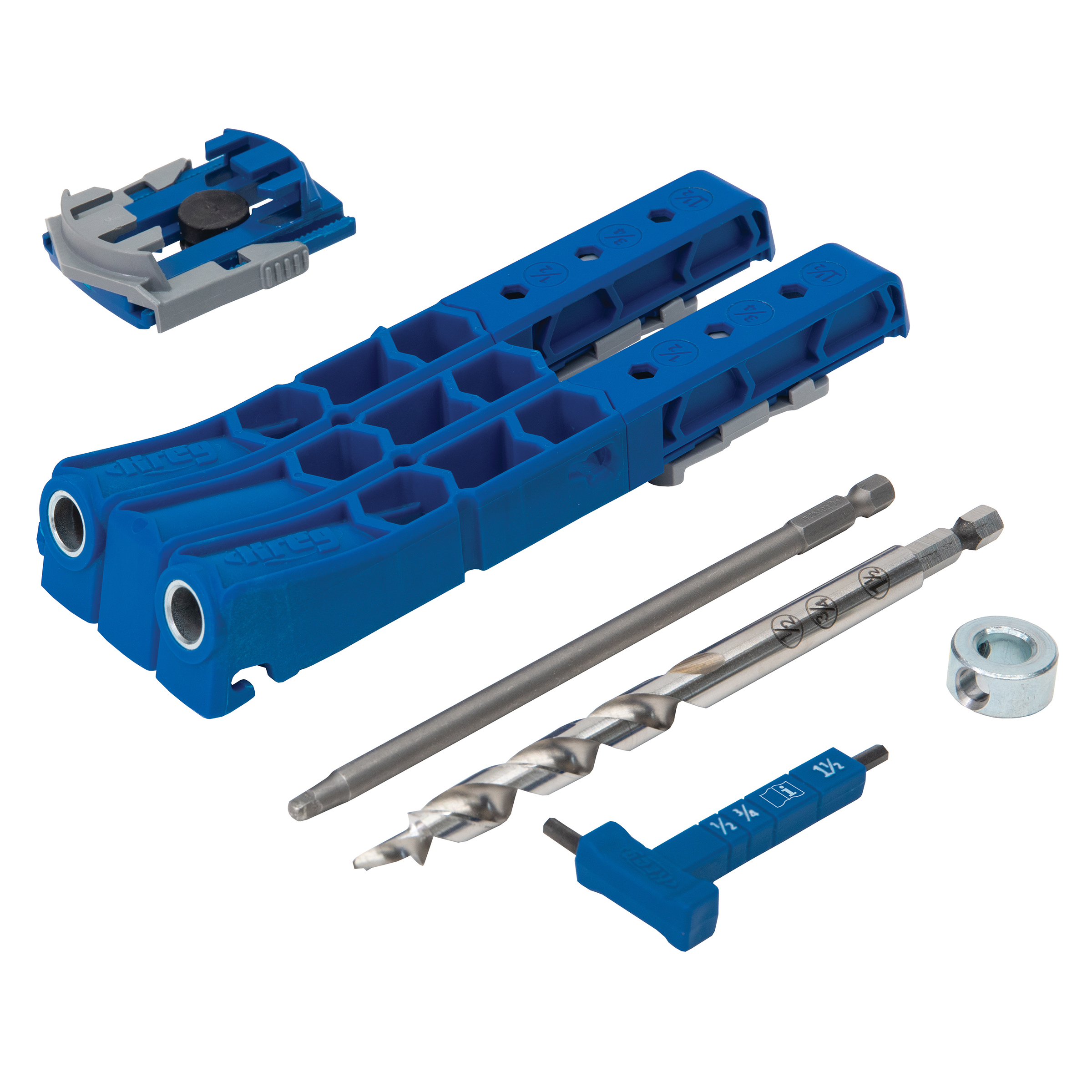
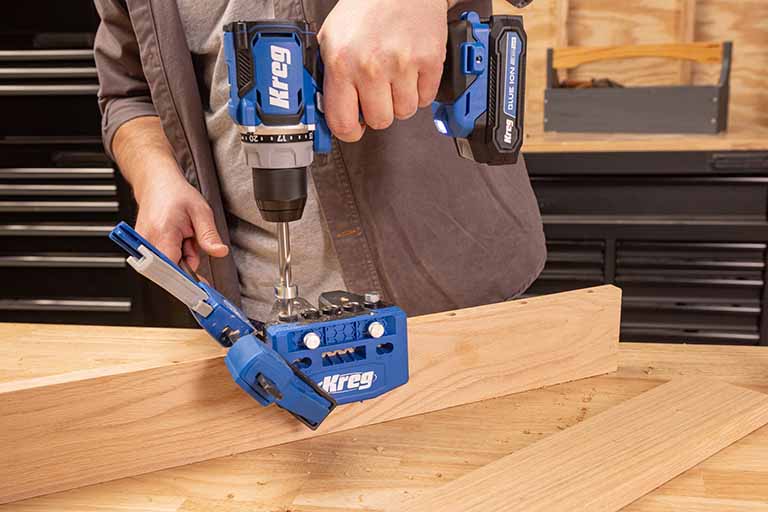
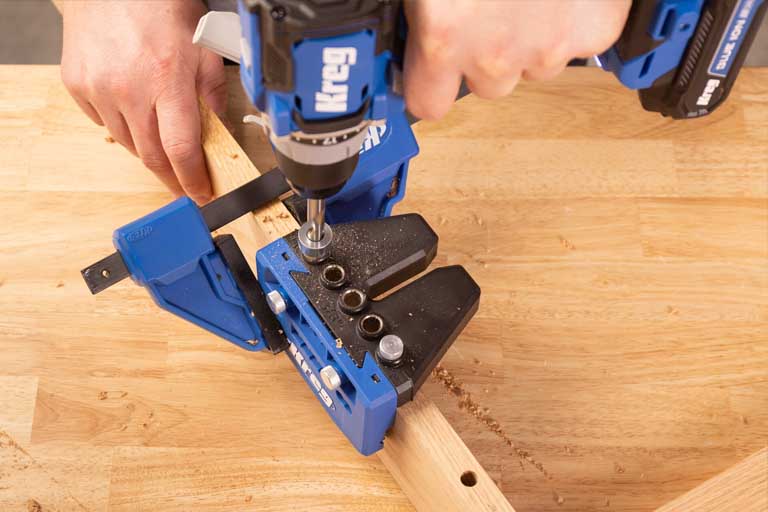
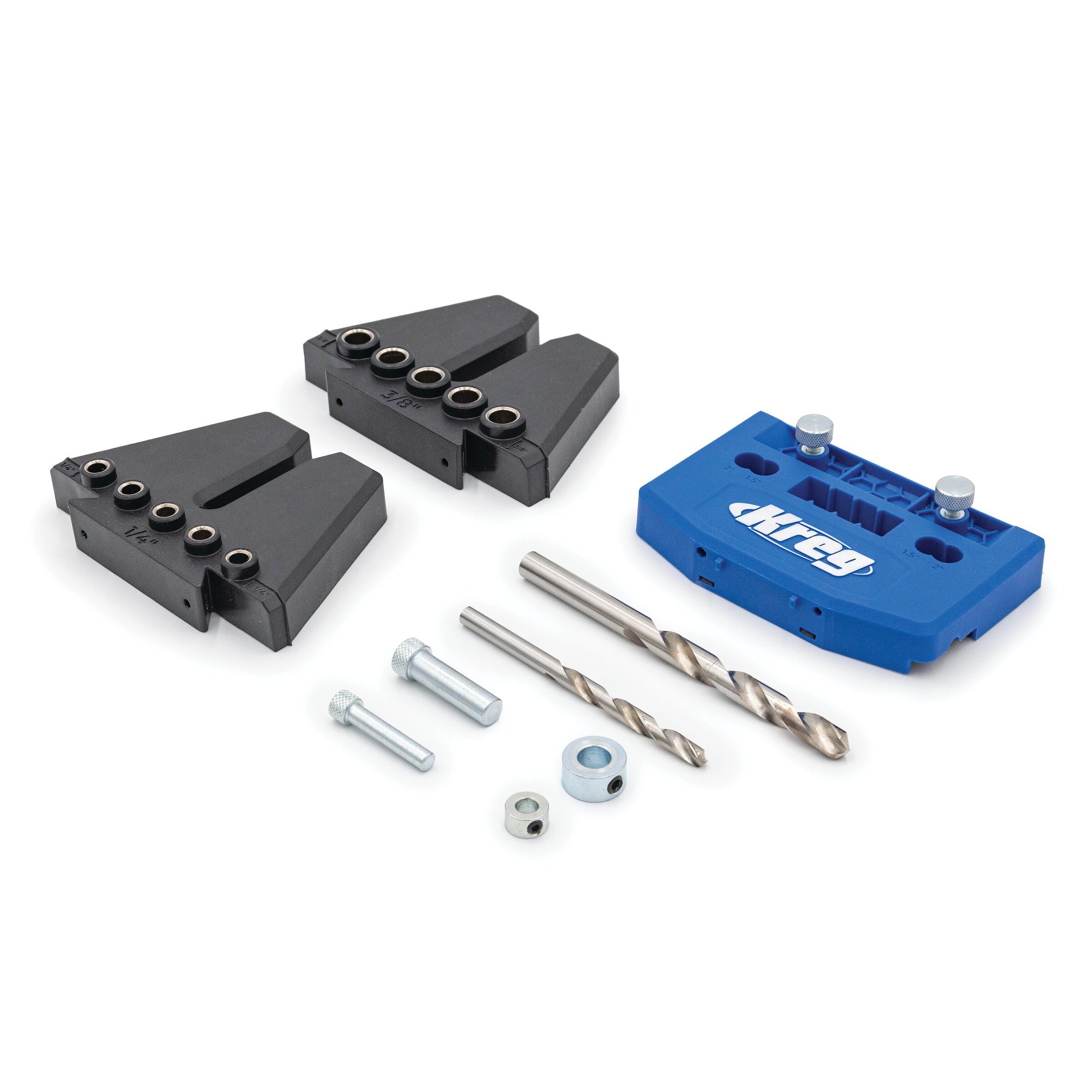
The Kreg Dowel Jig Kit follows the preset philosophy, giving users multiple alignment methods instead of automatic centering.
Key features include:
• removable drill guide blocks
• alignment grooves and reference lines
• alignment pins for spacing
• versatility to create many joint types, including edge-to-edge, edge-to-face, and miter
• onboard measuring scale and stop collar
• hardened steel guides
• clamp-ready body for stability
The advantage is control. You choose how the jig aligns, allowing it to work across cabinets, panels, repairs, and furniture parts.
Self-Centering vs. Preset Dowel Jigs
Both styles have their place, but in general, keep the following in mind.
Self-centering jigs are best when:
• boards are flat
• edges are accessible
• thickness is consistent
Preset jigs are better when:
• joints vary
• materials differ in thickness
• repeatability matters across many parts
If your work is simple and flat, a self-centering jig works well. As projects grow more complex, a preset jig often becomes the better long-term solution.
FAQs
What is a self-centering dowel jig?
A self-centering dowel jig is a drilling guide that clamps onto the edge of a board and automatically positions dowel holes in the center of the material thickness.
How to use a self-centering dowel jig?
To use a self-centering dowel jig, clamp it onto the board edge, align the guide with your hole location, drill to depth, then reposition the jig for the next hole.
How to get dowels to line up perfectly?
Dowels line up best when you reference the same face on both mating parts, use a jig with repeatable alignment features, and drill all matching holes without changing the setup.

Associated Products
Kreg Dowel Jig Kit